Masterly Inactivity


Late in my recovery, I was lying in my easy chair while my wife sat beside me drawing flowers. I told her, “Right now, there is nothing for me to do but wait. Waiting is the only thing I can do, the only thing I should do, and really the only choice I have.”
She said, “There is a term in medicine for that: masterly inactivity.”
It is an old medical idea of deliberate non-intervention—watching carefully, creating the right conditions, and resisting the urge to act before action is actually needed. Not neglect. Not passivity. Sometimes, time itself is part of the treatment.
Masterly Inactivity
During the early part of my illness, I believed every discomfort required an answer.
If nausea came, I wanted to know why. If dizziness started, I wanted to know what I should take. If something changed in my body, I searched, asked my wife, asked AI, adjusted food, medicine or timing—anything that might improve the situation.
My mind kept returning to the same demand:
There must be something I can do - now, right now!!!
That instinct had served me well for years. When something did not work in business, I learned more, changed something and tried again.
Naturally, I tried to recover the same way.
The Night I Wanted Something Done
I remember one night in the hospital when severe palpitations and hypnic jerks kept waking me. Anxiety flooded in. My blood pressure went as high as around 160/100, and I didn't sleep for even a minute.
Throughout the night, I kept asking my wife to call the doctor.
Call the doctor. Something is happening. Do something.
A young doctor came, examined me, but there wasn't much more he could do at that moment.
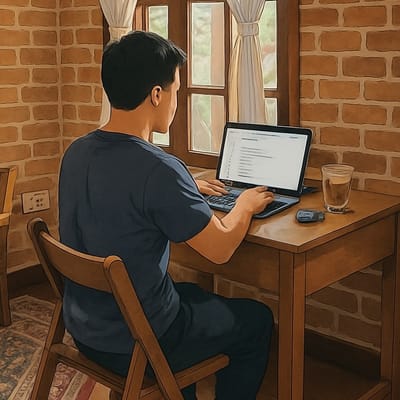
So I spent the rest of the night looking through the window, simply waiting for daylight. I watched the darkness slowly turn into morning.
But once morning arrived, my mind started running again.
When the specialist came around 11 a.m., I almost pleaded with him.
Help me. Do something different. Give me something. Inject me with something. I just want to sleep.
He gave me two options. One was Xanax, which I had already tried the night before without sleeping. The other was medication by injection to put me to sleep, followed later by another injection to wake me.
Finally, there was another action available.
And immediately I started asking questions.
Is it safe? What happens afterward? Do I really need this?
Even exhausted and barely thinking clearly, the habit was still there: act, but also control the action.
Then something in me stopped.
I decided not to take the injection.
Sometimes the answer available to us is not the answer we actually want.
Knowing When Enough Is Enough
Recovery kept teaching me versions of that same lesson.
There were things I could do: take the medicine, eat carefully, rest, close my eyes and conserve energy.
But eventually there was nothing useful left to add.
There was only waiting.
I used to think waiting meant doing nothing. Now I see another possibility.
Masterly inactivity is not the absence of action. It is knowing when enough has already been done.
Sometimes another adjustment, another search or another intervention does not improve the situation.
Sometimes the work is to create the right conditions—and then have enough restraint to leave things alone.
Shaped from my audio journals with the help of an AI assistant.
Member discussion